

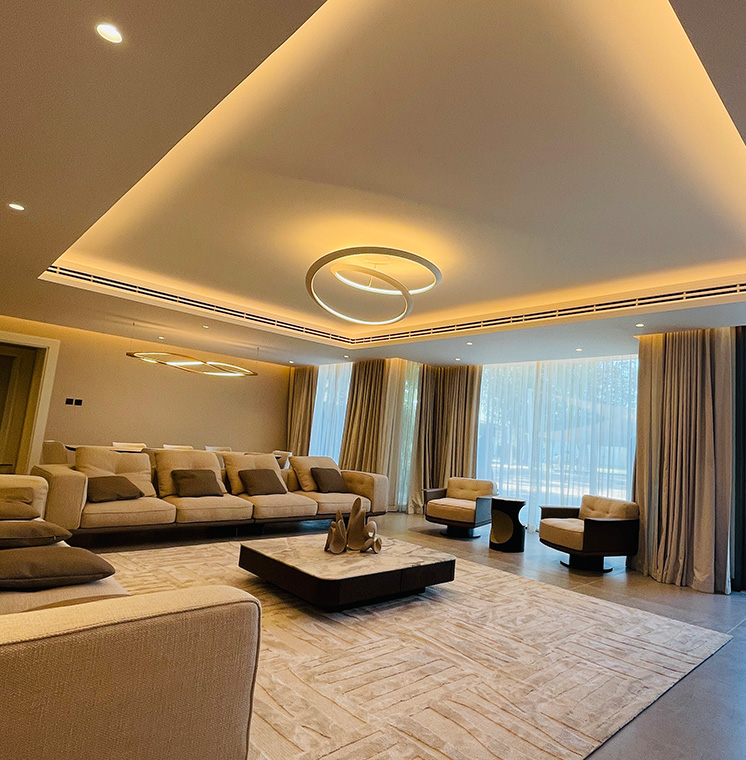
When planning any residential or commercial project, an important question often comes up at the very beginning: what is the difference between fit-out and renovation?
This is not a minor question, because understanding the difference helps determine the type of work required, the execution approach, the expected budget, and even the most suitable party to handle the project.
Many clients confuse fit-out with renovation, especially when the final goal is to improve a space or prepare it for use. In reality, however, there is a clear difference between the two in terms of the starting point, scope of work, nature of the changes, and the final outcome. If you are genuinely asking what the difference is between fit-out and renovation, the best place to start is by understanding each term in a practical way before making any decision.
In simple terms, fit-out usually refers to preparing an interior space so that it becomes ready for use or occupancy, especially when the space is new or semi-finished and requires complete internal works. Renovation, on the other hand, is more closely related to repairing or upgrading an existing space, whether to fix damage, update its appearance, or improve its efficiency without starting from scratch.
If you have a new space that needs partitioning, preparation, finishes, and operational systems, your project is likely closer to fit-out. But if you already have an existing space that needs repairs, upgrades, or solutions for current issues, then it is more likely closer to renovation.
Knowing the difference between fit-out and renovation helps you make more accurate decisions from the start. A mistake in defining the project type can lead to an unsuitable quotation, an execution plan that does not reflect your real needs, or even choosing a company that specializes in a completely different type of work.
In the Saudi market, this distinction becomes even more important because projects vary widely between villas, apartments, offices, retail stores, and commercial spaces. Some projects need full internal preparation, while others need improvement and repair of what already exists.
Fit-out is the process of preparing an interior space so it becomes ready for actual use. It is usually applied to new or semi-finished spaces that require internal works such as partitions, ceilings, flooring, lighting, finishes, and daily-use installations.
In many commercial or administrative projects, the goal of fit-out is not simply to improve the appearance, but to transform the space into a practical environment that is ready for operation. That is why fit-out is commonly seen in offices, showrooms, stores, clinics, and some new residential projects.
Fit-out is usually the suitable option when the space is:
Here, understanding the difference between fit-out and renovation becomes very important, because fit-out usually does not start with repairing existing damage. Instead, it starts with turning an incomplete space into one that is fully ready and functional.
Renovation is more closely related to repairing and upgrading an already existing space. It may include addressing problems in walls, ceilings, flooring, or facades, updating old elements, improving the overall appearance, or increasing the efficiency of the space without carrying out a full internal build from the beginning.
In some cases, renovation may be limited to a certain part of the project, such as fixing cracks, renewing a facade, or improving certain internal works. In other cases, renovation may be broader and involve a major update to the space, but it still remains based on an already used area that needs repair or development.
Renovation is usually the suitable option when the space is:
So, when thinking about the difference between fit-out and renovation, renovation can be seen as improving or repairing something that already exists, while fit-out is about preparing something incomplete so it becomes ready for use.
One of the clearest ways to understand the difference between fit-out and renovation is to look at the starting point of each project.
Fit-out usually starts with a new or semi-finished space that needs complete internal preparation. Renovation, on the other hand, starts with an already existing space that needs repair, upgrading, or improvement.
This difference is very important because it affects the planning method, priority setting, and the type of expertise required for execution.
The project objective also helps explain the difference between fit-out and renovation.
In fit-out, the goal is often to prepare the space so it can perform a specific function almost from scratch, whether as a workplace, a shop, a clinic, or a new residential unit.
In renovation, however, the goal is usually to repair what already exists, renew it, improve its efficiency, or enhance its appearance and function without the project being based entirely on internal setup from the beginning.
One of the most important aspects of understanding the difference between fit-out and renovation is the scope of work.
In fit-out, the scope is usually broader and may include:
Renovation, however, may be narrower or more selective, such as:
When comparing the two options, many clients ask: is fit-out more expensive, and is renovation faster?
The answer depends on the size of the project, but in general, fit-out may require a larger budget when the work is comprehensive and involves preparing the space from the beginning. Renovation, however, may cost less or more depending on the level of damage, the extent of the changes, and the type of update required.
Not always.
In some cases, renovation turns out to be broader than expected, especially if hidden problems appear in the structure, finishes, or technical works. So it is not enough to assume automatically that renovation is the cheaper option. The actual condition of the space must be evaluated first.
In many projects, yes, because fit-out may involve a larger number of work items and greater coordination between different tasks. However, this does not mean that every renovation project will be quick, because some major renovation works can also require significant time and effort.
Another important point in understanding the difference between fit-out and renovation is that each path comes with different technical challenges.
In fit-out, the challenges are often related to early planning, system coordination, and clarity of the final use of the space.
In renovation, the challenges are more often related to what already exists, such as damage, limits on modification, working within a previously used space, or dealing with old elements that require precise solutions.
If you are still wondering which option is more suitable for your project, start with these practical questions:
The answers to these questions will give you an accurate initial understanding and help you request the right service instead of following a path that does not reflect your real needs.
There are clear indicators that a project is more likely to be a fit-out project, such as:
On the other hand, there are indicators that a project is more likely to be a renovation project, such as:
One common mistake is when a client asks for renovation while the project actually needs fit-out, or the other way around. This often leads to inaccurate pricing, unrealistic timelines, or expectations that do not match the nature of the work.
Other common mistakes include:
That is why understanding the difference between fit-out and renovation from the beginning can save a lot of time and make the decision clearer and the execution more organized.
If we want to summarize the difference between fit-out and renovation in a practical way, we can say that fit-out focuses on preparing the space so it becomes ready for use, while renovation focuses on repairing or renewing an existing space.
The clearer the project type is from the start, the easier the following decisions become in terms of budget, timeline, the right execution partner, and the way the work is divided.
In commercial projects, fit-out is usually related to preparing a new space for operation, such as offices, showrooms, or stores. Renovation, however, is more related to updating or repairing a commercial space that already exists.
Yes. In some projects, certain areas may need renovation while other areas need fit-out, especially in spaces that combine an existing structure with extensions or internal redistribution.
That depends on the condition of the property. If the unit is new and needs complete internal preparation, fit-out may be the closer match. If it already exists and needs repairs and upgrades, renovation is likely the better fit.
No. It appears frequently in offices and commercial or administrative spaces, but it can also apply to some new residential projects depending on the nature of the space and the required works.
Whether your project is closer to fit-out or renovation, identifying the correct path from the beginning saves you a lot of confusion and helps you request a more suitable quotation, a clearer execution plan, and a result that is closer to what you actually need.
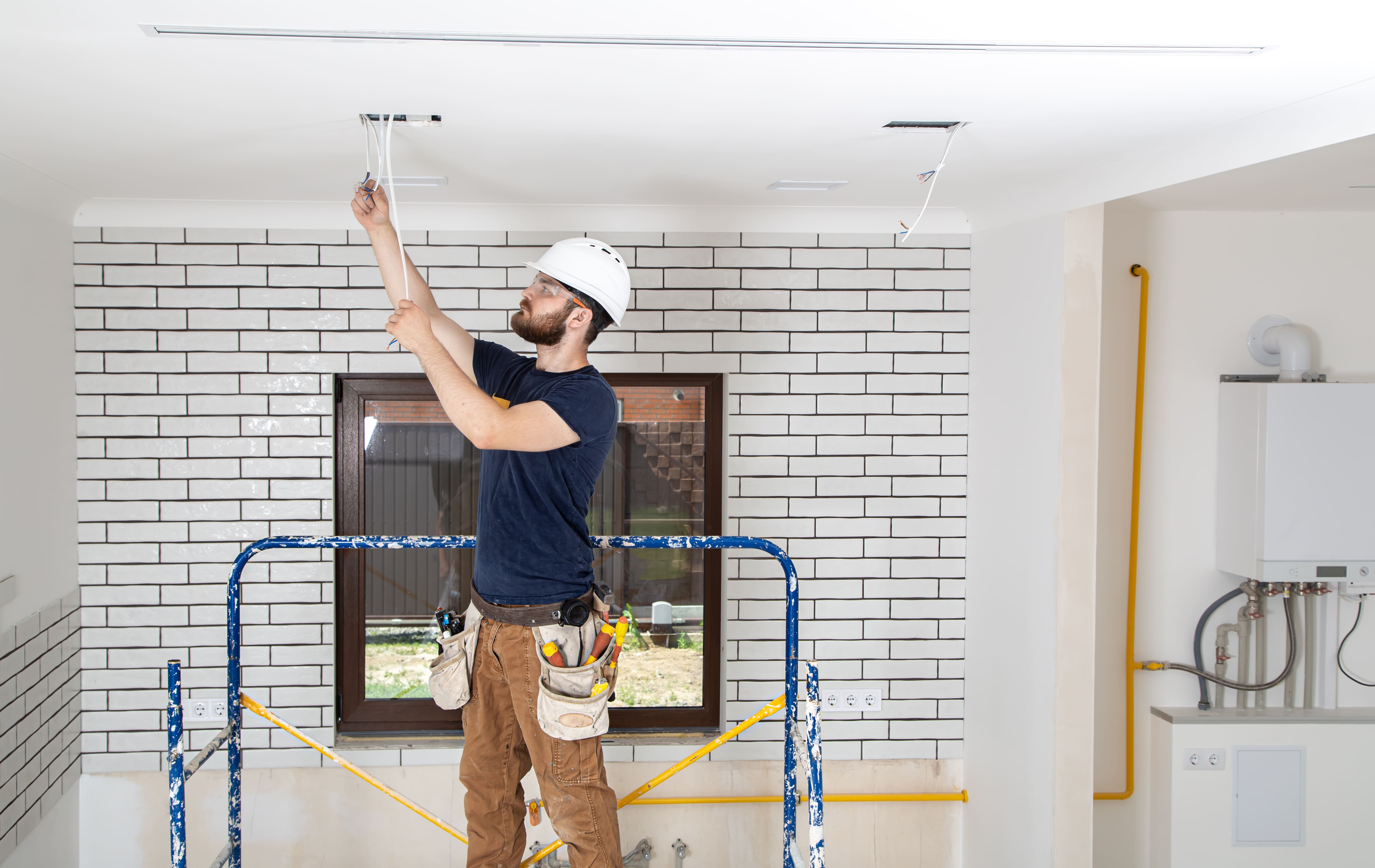
Avoid common gypsum work mistakes for quality construction: surface prep, mixing ratio, application techniques, joint management, prioritize quality control.

Transform your home workspace for productivity and well-being: strategic planning, ergonomic design, lighting, organization, tech integration, and personalization.
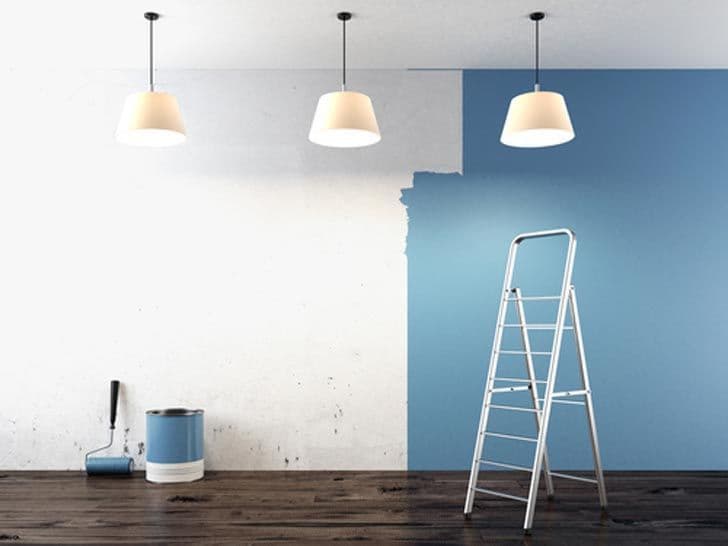
Learn how to choose the right fit-out company in Saudi Arabia based on experience, portfolio, pricing, quality, project scope, and communication.
Learn the difference between fit-out and renovation in terms of scope, cost, timeline, and project type, and discover which option suits your project best.